Transforming Urban Planning with Advanced Environmental Insights
Leveraging Data for Sustainable City Development Cities globally face unprecedented challenges, from rapid urbanization to the...

Leveraging Data for Sustainable City Development Cities globally face unprecedented challenges, from rapid urbanization to the...

Precision in Green Initiatives: Leveraging Data In an era defined by increasing environmental consciousness, understanding and mitigating...
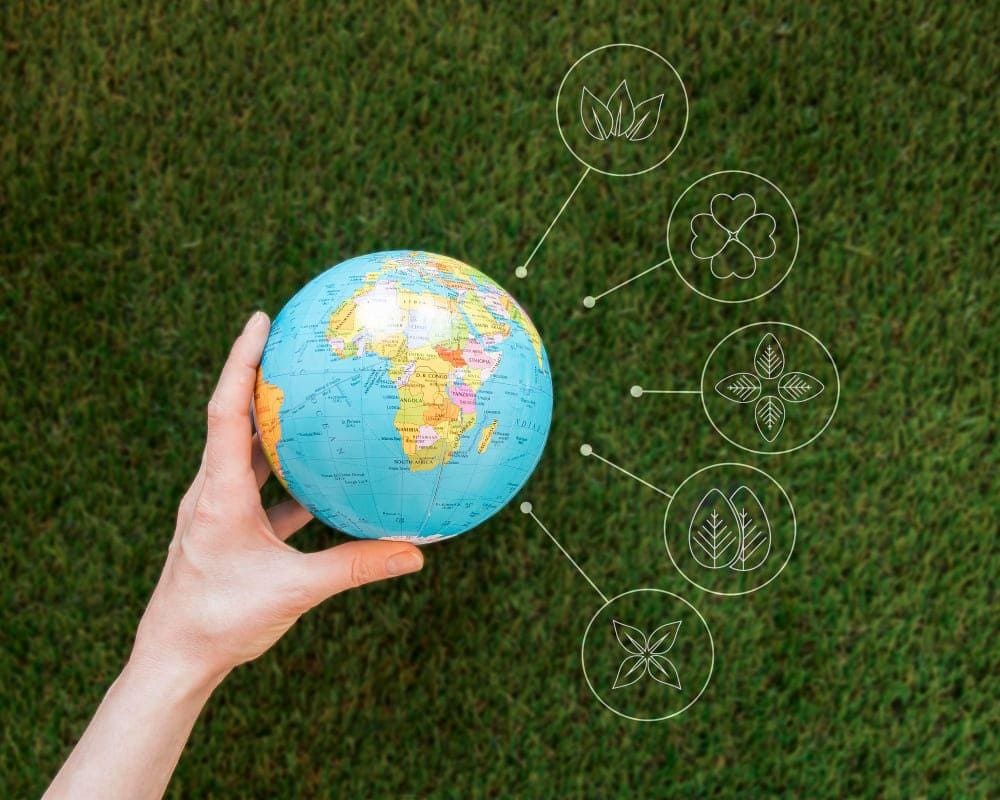
Understanding the intricate health of our planet has become an imperative, not merely an academic exercise. As global challenges intensify, from climate shifts to biodiversity loss, the ability to accurately perceive and interpret ecological data is more critical than ever. Traditional methods, while foundational, often struggle to provide the comprehensive, real-time insights necessary for effective decision-making and proactive conservation efforts. This gap highlights a pressing need for innovative approaches to environmental monitoring and visualization.
The sheer volume and complexity of environmental data generated today demand sophisticated tools that can transform raw information into actionable intelligence. Satellite imagery, sensor networks, and ground-based observations produce a continuous stream of data points, each holding a piece of the ecological puzzle. Without advanced visualization techniques, this wealth of information remains largely untapped, limiting our capacity to grasp the nuanced dynamics of ecosystems and their responses to various pressures.
This is where cutting-edge visualization platforms play a pivotal role, offering a dynamic window into the planet's ecological status. These systems move beyond static maps, presenting data in interactive, multi-layered formats that reveal patterns, trends, and anomalies. Such advancements empower researchers, policymakers, and conservationists to gain deeper insights, fostering a more informed and collaborative approach to environmental stewardship.
A key aspect of these modern visualization solutions is their robust Browser & Platform Compatibility. Ensuring that critical environmental data can be accessed and analyzed across various devices and operating systems is fundamental for widespread adoption and utility. This accessibility facilitates collaboration among diverse stakeholders, from remote field scientists to urban policy planners, all relying on a consistent and reliable interface.
Furthermore, the development of user-friendly interfaces, coupled with powerful analytical backends, democratizes access to complex ecological information. No longer confined to specialized labs, these tools enable a broader audience to engage with environmental data, fostering public awareness and participation. The focus on seamless Browser & Platform Compatibility ensures that geographic barriers do not impede the sharing of vital ecological insights.
By leveraging these technological advancements, we can move towards a future where environmental health is transparently monitored and understood. The ability to visualize complex ecological processes in an intuitive manner is transforming how we perceive our relationship with the natural world, paving the way for more effective strategies to protect and restore our planet's delicate balance. This represents a significant leap forward in environmental intelligence.
Experts widely acknowledge that advanced ecological visualization is revolutionizing conservation science, yet discussions often highlight the nuances of its implementation. Dr. Anya Sharma, a leading spatial ecologist, emphasizes the transformative power of integrating diverse datasets. She notes, “When satellite imagery, sensor data, and citizen science contributions are brought together in a visual interface, we unlock patterns that were previously invisible, allowing for more targeted interventions.” This convergence of data types creates a holistic view often unattainable through singular observational methods.
However, Dr. Mark Jensen, an environmental policy analyst, cautions against over-reliance on technology without robust ground validation. He argues, “While stunning visualizations can capture attention, the underlying data must be rigorously verified. A beautiful map showing forest cover changes is only as good as the accuracy of the algorithms and the quality of the input data. There's a risk of creating compelling but potentially misleading narratives if not carefully managed.” This perspective underscores the ongoing need for field research to complement remote sensing.
Another point of discussion centers on the ethical implications of data collection and visualization. The ability to monitor vast areas raises questions about privacy and the potential for misuse of information, particularly concerning indigenous lands or sensitive ecological sites. Ensuring data governance frameworks are in place, which prioritize transparency and community consent, is paramount. This ensures that powerful visualization tools serve the collective good without inadvertently infringing on rights or local autonomy.
The challenge of making complex ecological models accessible to non-experts is also a significant topic. While tools like those offered by EcoVision Cloud strive for intuitive interfaces, translating scientific uncertainty into understandable visual representations remains an art. Striking a balance between simplification for broader understanding and retaining scientific rigor is a continuous endeavor, requiring thoughtful design and clear communication strategies to avoid misinterpretation.
The journey towards a comprehensively understood and sustainably managed planet is increasingly reliant on our capacity to see and interpret its ecological pulse. Advanced visualization platforms offer an unparalleled opportunity to bridge the gap between complex scientific data and actionable insights, fostering a more proactive and informed approach to environmental challenges. They serve as essential tools for navigating the complexities of our changing world.
By continuing to invest in innovative visualization technologies and fostering interdisciplinary collaboration, we can empower a new generation of environmental stewards. The ability to dynamically observe, analyze, and communicate ecological health will be fundamental in shaping effective conservation strategies and ensuring a resilient future for all life on Earth. This collective effort is key to enduring planetary well-being.